
The Leadership Shortage and a Surprising Suspect
A love of coaching, a blueprint of growth, seven competencies to help people grow, and a master’s degree to hang on the wall had me looking around and wondering why, especially in the church, there seemed to be a shortage of high-impact leaders making a dent in the brokenness of the world. Armed with a new love of research, I set out to answer the question: Why is there a shortage of leaders in places that need them? (Faith & Non-Profit)
From a competency standpoint, I was led to believe that there was a deficiency in people’s ability to Develop People (back to one of the 7). This made sense, and it still does to a point. But over time, and especially in the last year, I’ve begun to suspect the limiting factor might be somewhere else—somewhere deeper than competencies alone.
Recently, I did a simple but powerful thinking exercise that helped me see where this question really started, and how my thinking has been shaped along the way.
Tracing the Seed of This Question
This week, I continued to dig into the research on identity development and did an exercise as a thinking exercise between the academic journals. As I was pondering the impact of identity on purpose and calling, I decided to track how I had arrived at where and how I was thinking.
Using a journal, I started with the question: Where did this thought become a seed that has grown now into this thing that I’m looking at and trying to understand? As I sat, I went back to John Maxwell leadership—not the first few books, but the coaching training that I did. At the time it was 36 online classes, and I see that how I began to think changed in that time.
There was a systematic structure and a community belief of nearly infinite potential in people. When I attended the certification course, I was surrounded by 3,000 people for a few days that were all into growth and development, and this provided a sense of inspiration and possibility that I think is still impacting me nearly a decade later.
Defining Moments That Reshaped My View of Leadership Development
The view of coaching really changed my thoughts on training and led me to my “big first” original thought on all of this. While developing the scope and sequence for our Leadership Institute, God gave me clarity on the skills and abilities of leadership to help train and develop others.
The 7 Competencies of Leadership (Know Self, Know Others, Manage Self, Manage Relationships, Develop People, Build Teams, and Solve Problems) were my first contribution to growth and development. Beginning to coach people with an aim toward these competencies added a new level of passion to development, because I could see people’s growth and development happening. Being inspired by self-assessments created and used by thinkers and leaders like Daniel Goleman, I was able to create a self-assessment to help leadership students see where they were and where they needed to grow in relation to the 7 Competencies of Leadership.
This led me to grad school, and Dr. John Townsend. Looking back at school, a few things had a tremendous impact on who I am and how I’m thinking. My cohort were leaders from all over who had different thoughts and opinions and yet a shared heart for growth and development and positive impact. They have and continue to inspire me and challenge my thinking with love. The school content was good, but these people are gold.
During grad school, one of my cohort, Kerry, got certified in Working Genius and trained our group for a project in our class. Later we all attended a class taught by Pat Lencioni and—don’t tell him—but Kerry had taught it and trained us better. While I love and use the content still to this day, seeing that there are systems waiting to be discovered and used to help people was a huge source of both awe and inspiration. Pat used his life frustration and curiosity, and God-given gifts and talents to make the world more awesome, and then he used Kerry to train me on it.
We had a class on Ethical Decision Making and Cultural Foundations, and during the class we had a fishbowl exercise where six of us (including myself) became an executive team responding to a large-scale organizational crisis. We learned after the exercise that we were using facts and data from the YMCA’s response to Hurricane Harvey in Houston in 2017. It was intense and amazingly awesome. We had twenty minutes to “solve” a very major organizational problem as a team while the rest of the class watched. It sharpened my thoughts and beliefs on training and connected my development thoughts back to a few careers ago when I was training SWAT teams.
The people and the exercises impacted my thinking, but nothing in school impacted or changed me as much as researching and writing a thesis. This is when the Lord revealed to me that I am a creator, and that I can take what I’ve learned and turn it into something that didn’t previously exist. In his book Integrity, Dr. Henry Cloud connected personal growth to the 2nd Law of Thermodynamics, and my head and heart exploded with joy. After a lot of hours, my thesis on thermodynamic development was born.
All of this together—coaching, the 7 Competencies, grad school, systems like Working Genius, SWAT-style training, and a thesis on thermodynamic development—kept shaping how I think about leadership, growth, and the systems that help (or hinder) people.
From Competencies to Calling: The Unresolved Question
Out of this came the research and work that created Make the World More Awesome. It is a simple-to-implement cycle for development. It’s easy to teach and train, and adds structure that can be individualized for implementation and delivery. This last year, I’ve been training leaders in the cycle both in the United States as well as overseas, and the results have been encouraging.
But the question of “Why is there a shortage?” still doesn’t seem fully answered.
At the start of our Leadership Institute this year, I shared a three-circle diagram and explained to students that their calling was between them and God, but that we could help them grow their character and competency. As the year progressed, I softened my position on calling a bit and used the wording that it’s still between you and God, but we can help you discern it.
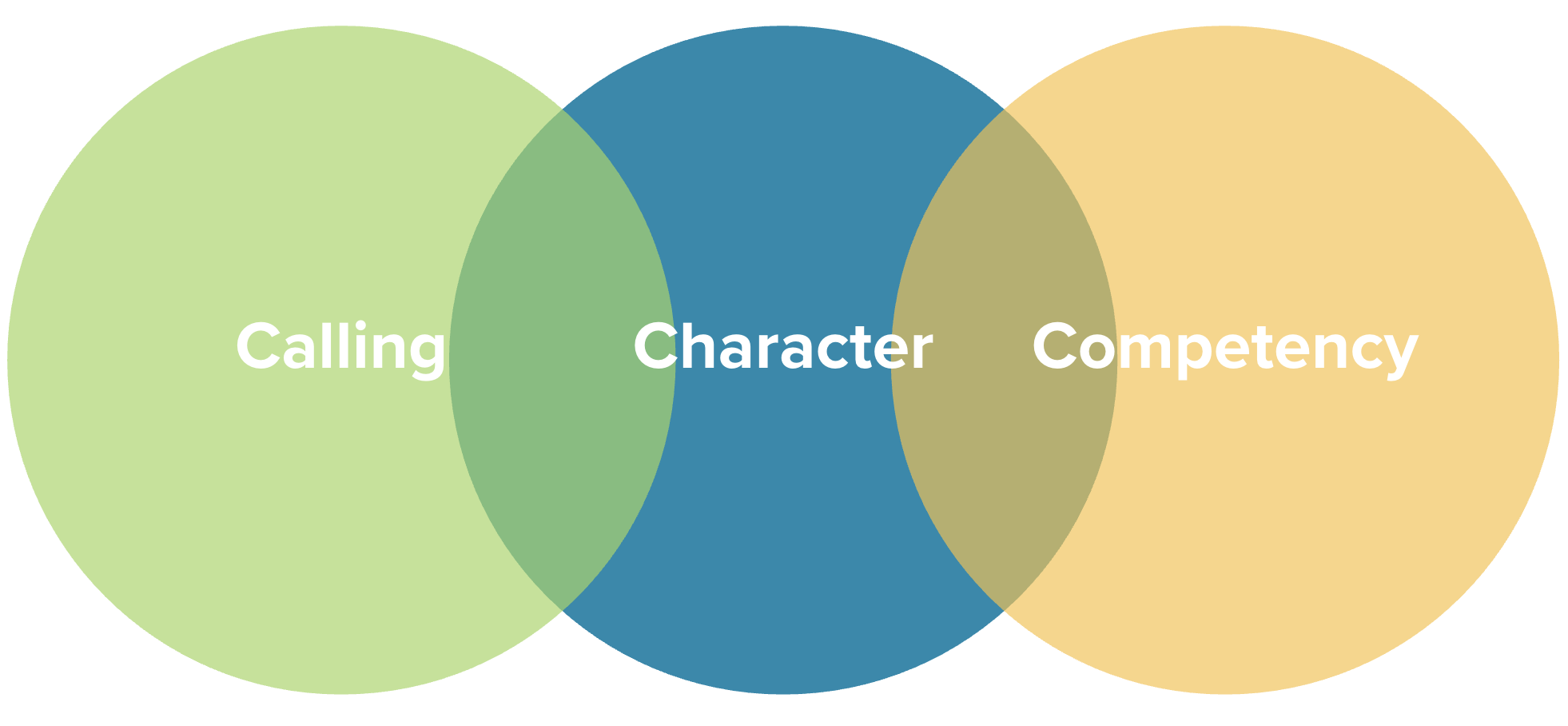
After many coaching conversations and topical meetings with all kinds of leaders, I began to think that the limiting factor to the shortage might actually be here in calling, and that competency development won’t actually solve the problem. Now, a few months into this thinking, my starting diagram has changed.
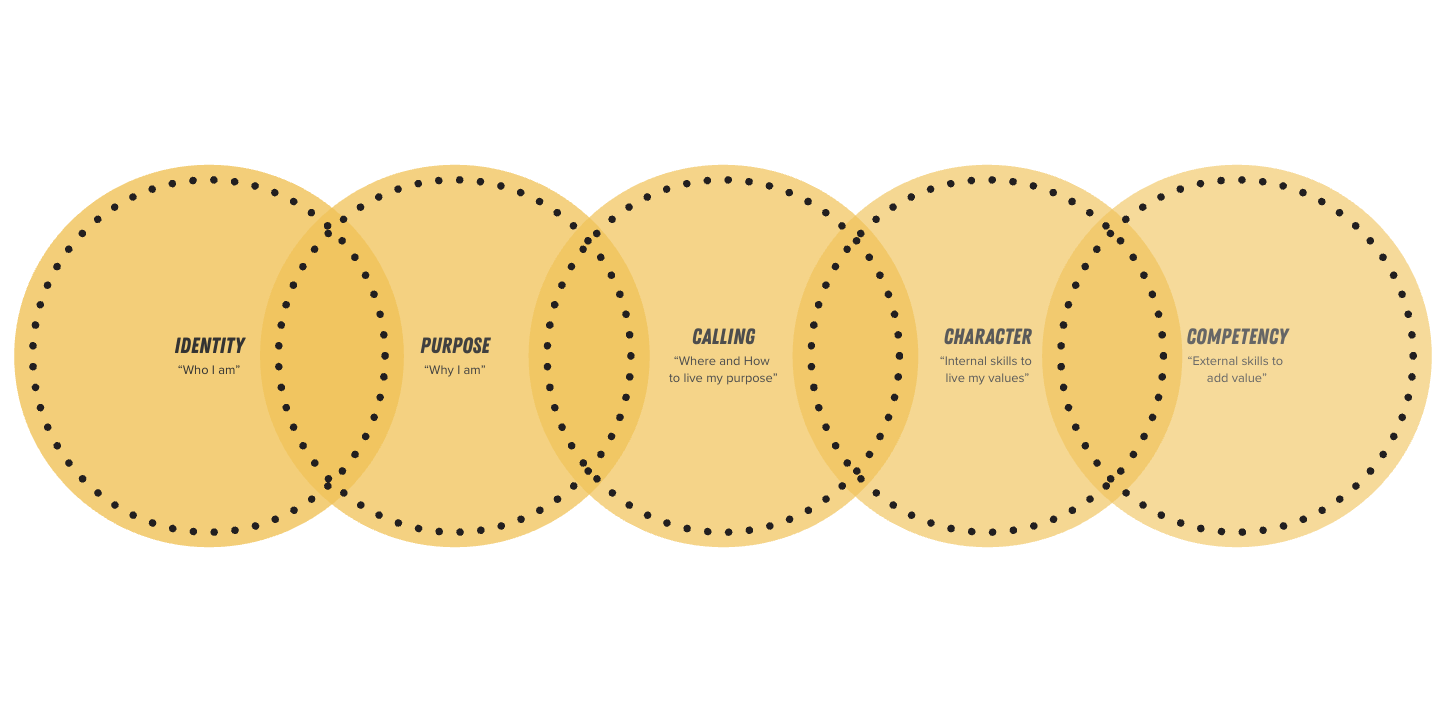
I see the circles as interconnected and see that energy comes from at least three sources: God, Self, and Others. The better defined and created the sections are, the more the energy creates desired results. The less defined and built, the greater the energy will leak from the system and produce little or no results.
Someone whose identity and purpose are unclear or unknown can go through all the same learning, training, and coaching and not see desired results because the energy is bled out of the system in the cracks.
My Working Hypothesis (and What’s Next)
My theory, or hypothesis at this point, is that the more we can help with identity development, the more we can help create clarity in purpose discovery, and the more we will see leaders who grow and develop and make the world more awesome.
I’m grateful for the journey that brought me here: from John Maxwell coaching and the 7 Competencies, to grad school and SWAT teams, to thermodynamic development and Make the World More Awesome. But I don’t think the work is finished. I think we’re just now getting close to the heart of the shortage.
Time to learn some more and test a lot of this thinking.