
Whose You Are, Who You Are, and How Identity Develops
When I compare myself to my friends and peers, I’m weirdly curious.
According to the Big Five personality framework, I’m high in openness, pretty stress-tolerant, energized by people and ideas, low in anxiety, and generally warm and collaborative. In other words, I’m the kind of guy who spends his mornings and evenings looking over notes, reading psychology journals, replaying conversations with my boss and other leaders, and telling anyone who will listen—and a few who won’t—about what I’m learning.
I need to mow the yard, clean the kitchen, and prep for a wedding and my son’s graduation this weekend, and here I am on the computer, trying to capture a week’s worth of thinking about a project that seems to excite me more every day.
This week in meetings with leaders I respect, the topic of identity development came up multiple times. In a developmental conversation with a younger leader I’m getting to know, he told me he believes that knowing whose you are is foundational and primary to knowing who you are. Yesterday, my boss added another angle: the existential search for identity is secondary to our positional identity in the kingdom of God.
I agree with both of their positions. At the same time, I believe very few people actually dig into a true understanding of who they are.
This weekend I’ll be preaching a sermon on identity inside a department of corrections prison. (Yes: graduation, graduation party, wedding, and a prison sermon. It’s a good thing part of my identity is really high physical and social energy.) As I prepared, I researched a scriptural account of who these men are in Christ—and who you and I are—if you’ve been saved by God’s grace through faith.
Scripture says that in Christ we are:
I am a child of God
John 1:12; 1 John 3:1–2; 2 Corinthians 6:18
I am loved, chosen, and accepted by God
Ephesians 1:4–6; 1 Thessalonians 1:4; Romans 5:8
I am a new creation
2 Corinthians 5:17; Galatians 6:15; Galatians 2:20
I am unified with Christ
John 15:4–5; Galatians 2:20; 1 Corinthians 1:30
I am forgiven, redeemed, and justified
Ephesians 1:7; Romans 5:1; Acts 13:38–39; 1 John 1:7–9
I am no longer under condemnation
Romans 8:1–2; John 3:18; Romans 8:33–34
I am sealed and given an inheritance
Ephesians 1:13–14; 1 Peter 1:3–4; Romans 8:16–17
I am part of Christ’s body
1 Corinthians 12:12–13, 27; Romans 12:4–5; Ephesians 4:15–16
I am created for good works and ongoing transformation
Ephesians 2:10; Romans 12:1–2; 2 Corinthians 3:18
I am a priest and ambassador
1 Peter 2:9–10; 2 Corinthians 5:17–20; Revelation 1:5–6
As I look at this list and contemplate identity, I can clearly see these statements as biblically true. But part of my identity—or at least my current identity—is how much I actually believe them. How much I believe them has nothing to do with how true they are, and everything to do with how I’m able to process and receive that truth.
In the work I’ve been doing, I see that identity development has a direct correlation to exploration and commitment. Luyckx’s research describes five dimensions of identity development, and all five revolve around these two factors.
Those dimensions are:
Exploration in breadth – gathering information and alternatives, generally a positive dimension.
Commitment making – making choices and forming initial commitments.
Ruminative exploration – getting stuck in uncertainty and feelings of incompetence; researching and never deciding. (I’ll be digging more into this, because I see this as a possible pattern in some who research long-term cross-cultural work yet are unable to make commitments.)
Exploration in depth – positive, adaptive examination of existing commitments, common in times of growth and development.
Identification with commitment – reinforcing and internalizing who I am through the commitments I’ve made. (why I told you I’m curious and high energy)
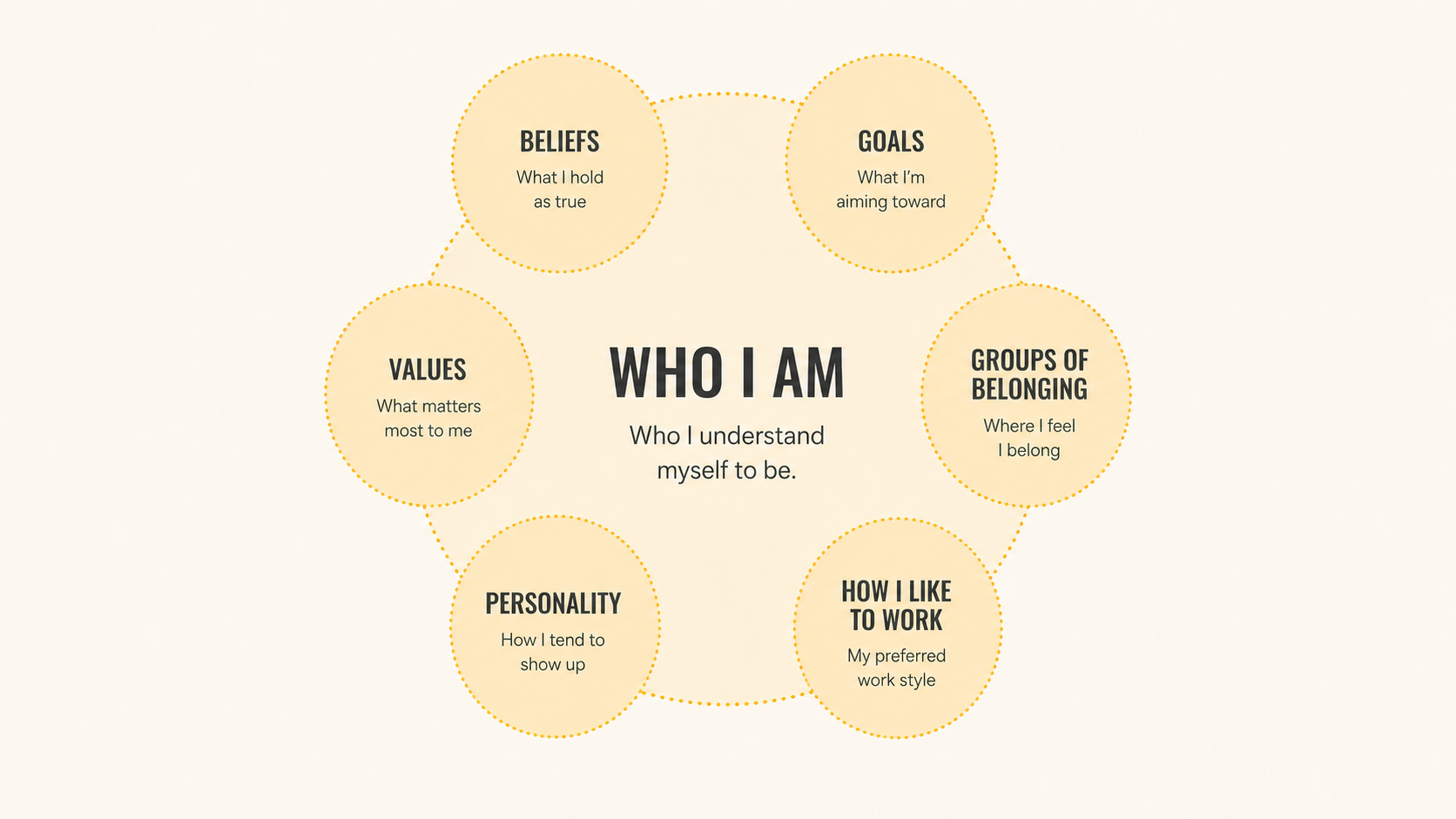
Identity development doesn’t just happen across stages and statuses; it also unfolds across dimensions. And I’m learning there are at least six factors that shape how we experience our identity—and possibly more that I have yet to discover.
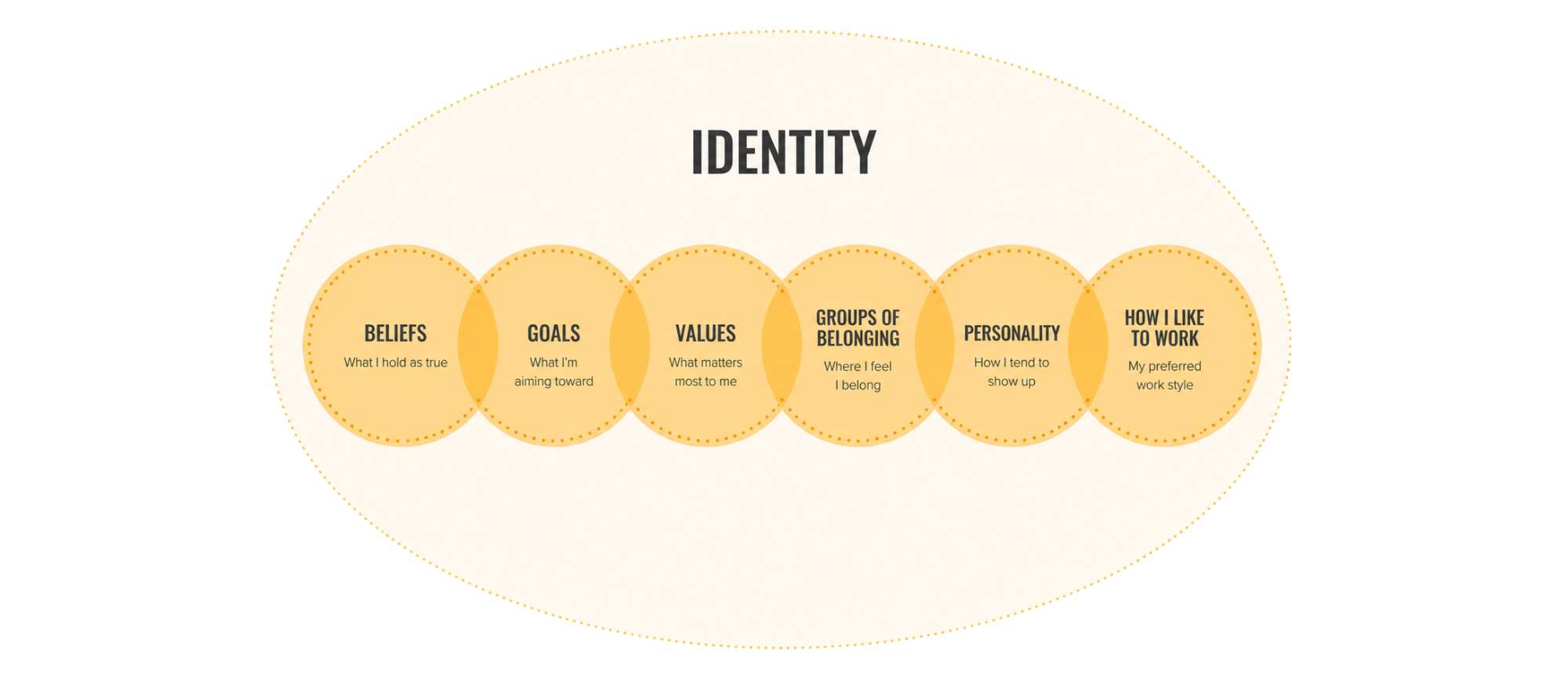
For the last few weeks, I’ve been using the image above to help me understand identity in a way I can research and learn from. After the conversations this week—including one with my boss about the possibility that values may have more impact than developmental stage—I updated my mental model.
So, leaders, who are you? And who are your people?
I’m going to go mow the yard and get ready for all the activities of the weekend.