
Who Will You Be at 80?
As I continue to dig into the science around identity, purpose, and calling, I find myself growing increasingly interested. I am convinced there is something here that can and will help leaders grow and develop, and also help people live much more impactful and fulfilling lives.
Yesterday, I had separate meetings with four men, all of whom have attended and studied in our leadership institute. All four men are in different seasons of life. The first is a successful businessman in his fifties who is transitioning to plant churches in another state. The next is a wildly successful professional about to turn forty who is balancing a very demanding, high‑profile career and an awesomely energetic young family. Another is in his late twenties, leading a ministry as a husband and father. The last is in his mid‑twenties and just celebrated his first wedding anniversary.
All four men share a desire to grow more fully in their character and competency in an effort to maximize their impact and generate the most success and fulfillment from their lives. Yet the where and how of their lives are wildly different.
Erikson’s stages of identity development came up in our conversations and were received with real fascination and deeper questioning. The high‑profile leader who is about to turn forty and I discussed middle and late adulthood, and the transition toward that last stage of identity development where we begin to ask the deep question: “Was it okay to have been me?”
I explained that I’ve heard it taught that when a person gets into their eighties, they are generally one of the best or one of the worst people you can be around. I’ve also heard it said that life either makes you better or bitter. As I’ve read and learned more on the science of identity, I can see how this foundational question can and will frame much of how we experience the last phase of our physical, earthly lives. My friend and I talked about the old men we know and have known—the ones who sink into isolation and appear to be the angry “get off my lawn” type of people.
We also talked about some of the best people we’ve ever had the pleasure to be around: elderly men and women who have really lived life well and seem to fully enjoy the moment and the people around them. They seem to carry a deep joy and appreciation for all of life.
I’m starting to see that living in a way that not only answers these deep internal questions of identity well, but also leans fully into the pursuit of identity, will help ensure that one day, I’ll be an old man marked by deep joy and appreciation.
As the conversation evolved, another question came up: What drives the joyful, appreciative old man’s desire to share wisdom and experience? While I do think that’s possible, I don’t think that’s what ultimately drives him. I think he’s far more driven to enjoy the moment and to love the people in front of him. He will serve and share if it’s appropriate, but he doesn’t need to if it’s not desired.
In The Meaning of Your Life, Arthur Brooks makes a connection between happiness and the amount and quality of our “virtuous relationships.” Using the work of Aristotle, he divides relationships into three categories:
Utility relationships are beneficial because each person gets something they want from the relationship. These are often “work friends,” and while they help make work better, the relationship is more deal than real.
Pleasure relationships are built around something that brings pleasure. These are based on activity, and if you remove the activity, you remove the relationship. A lot of golfing buddies, for example, aren’t the people you call when your life blows up.
Virtuous relationships are built on love for the person. You just genuinely love who they are as a person, and you don’t need anything from them in order to extend that love.
I’m beginning to see that the more solid our identity is—the more we’ve really answered “Erikson’s questions”—the more mental and emotional space we have to grow, develop, and enjoy virtuous relationships, and thus enjoy life.
Next week, I plan to dive into how status and dimensions of identity development show up in this wildly amazing process of answering the questions:
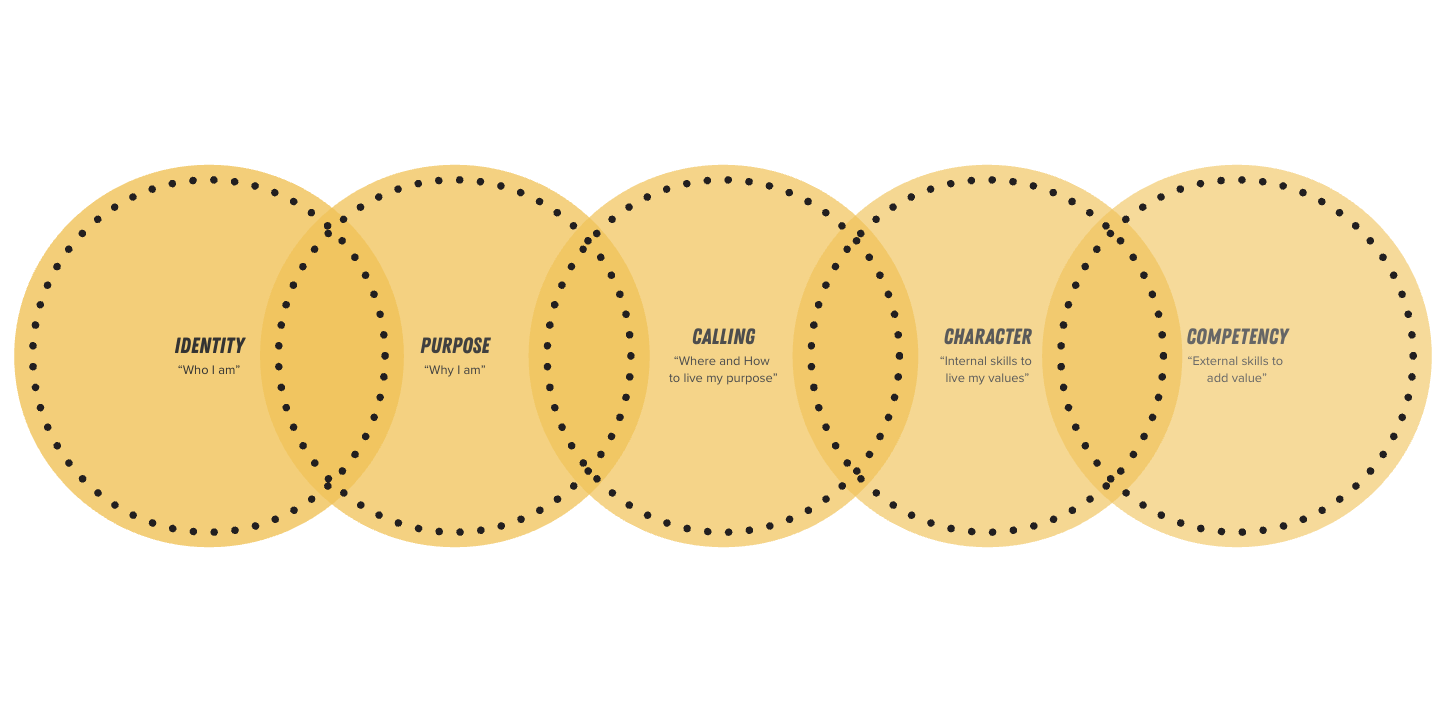
Who am I? (Identity)
Why am I? (Purpose)
How and where should I live my purpose? (Calling)
What internal skills do I need to live my values? (Character)
What external skills do I need to add value? (Competency)
So, leaders: Who are you becoming? How are your relationships? And what are you doing to grow in your identity so that, one day, you’re the kind of joyful, appreciative elder others love to be around?